Travel Baseball Myths Parents Still Believe

The Truth About Recruiting, Playing Time, Showcases, and “Elite” Baseball
Travel baseball is full of opinions.
Spend enough time around tournament complexes, Facebook groups, or baseball TikTok and you will hear:
“If your kid isn’t playing travel ball by 8, they’ll fall behind.”
“You need showcase baseball to get recruited.”
“Private lessons are the only way to improve.”
“More tournaments equal more development.”
“Only Major teams produce college players.”
Some of these ideas contain partial truth.
Many of them do not.
As both a coach and a parent, I have seen travel baseball families spend:
unnecessary money
unnecessary time
unnecessary stress
chasing myths that sound convincing but rarely tell the full story.
The reality is that travel baseball is much more nuanced than social media, tournament marketing, or dugout conversations often make it seem.
This guide breaks down some of the biggest travel baseball myths parents still hear constantly and what actually tends to be true in real baseball environments.

Myth #1: “Kids Have to Start Travel Baseball Extremely Young”
This is one of the biggest misconceptions in youth baseball.
Many parents feel pressure to start:
7U
8U
9U
because they fear their child will “fall behind.”
The reality?
Players develop at wildly different speeds physically, emotionally, and athletically.
Some athletes thrive in early travel baseball environments. Others develop later and still become outstanding players.
College coaches and recruiters care far more about:
long term development
athleticism
projectability
work ethic
than whether a player traveled nationally at 9 years old.
Myth #2: “More Tournaments Automatically Mean Better Development”
This one has become extremely common.
Some families believe nonstop tournament schedules automatically create:
better players
more exposure
faster improvement
But development also happens through:
practice
recovery
strength training
mechanics work
rest
confidence building
How Many Tournaments Is Too Many? discusses how overloaded schedules can sometimes create:
burnout
overuse injuries
emotional fatigue
declining performance
instead of faster growth.
Tournament volume alone does not guarantee development.
Myth #3: “Only Showcase Baseball Leads to Recruiting”
This myth creates enormous pressure for families.
Showcase baseball absolutely can help increase recruiting visibility, especially for older high school players.
But recruiting still depends heavily on:
skill level
athletic tools
performance
projection
academics
timing
Players get recruited from:
travel teams
high school programs
local organizations
regional events
all the time.
Exposure matters eventually.But development still matters more first.
Myth #4: “Every Player Needs Private Lessons”
Private instruction can absolutely help players improve.
Good instructors often help athletes:
clean up mechanics
build confidence
improve consistency
develop stronger fundamentals
But lessons are not magic.
Some players improve tremendously through:
team coaching
practice reps
backyard work
athletic development
self-driven repetition
The Real Cost of Private Baseball Lessons explains how lessons can become valuable tools when used intentionally instead of feeling like mandatory baseball spending.
Development is never one-size-fits-all.
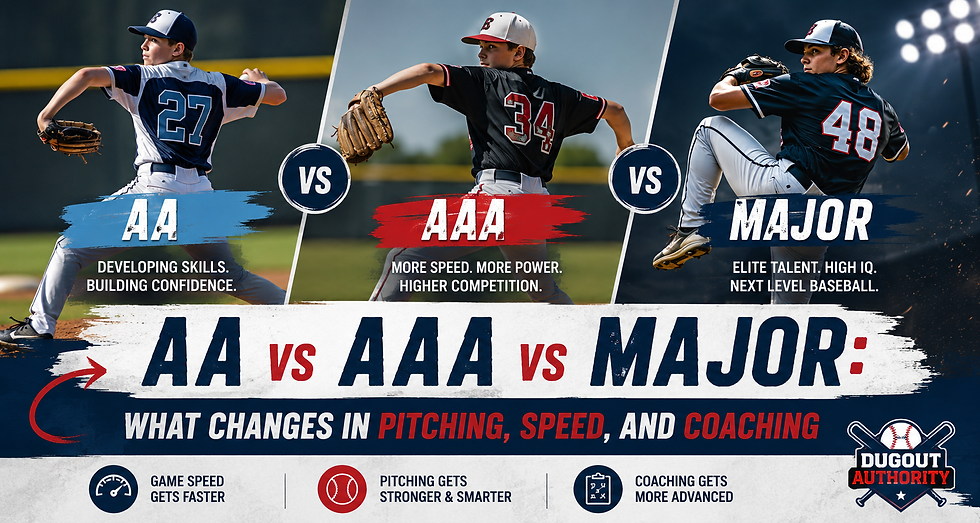
Myth #5: “Playing on a Major Team Guarantees Future Success”
Classification labels can create major pressure for parents.
AA. AAA. Major.
Families often assume higher classifications automatically predict:
future scholarships
recruiting success
long term baseball outcomes
But baseball development is not linear.
Some players:
mature physically later
develop confidence later
improve dramatically during high school
The healthiest environments usually balance:
challenge
confidence
growth
development
instead of obsessing over labels alone.
Myth #6: “Travel Baseball Guarantees College Baseball”
This one matters.
Travel baseball can absolutely create:
development opportunities
recruiting exposure
higher competition
But no team, tournament, showcase, or organization can guarantee:
scholarships
roster spots
college offers
College baseball is extremely competitive.
According to the NCAA Eligibility Center, only a relatively small percentage of high school athletes ultimately compete at NCAA levels.
That does not mean travel baseball lacks value.
It simply means families should keep healthy perspective around outcomes.
Myth #7: “Velocity Is All That Matters”
Velocity matters.
Especially as players get older.
But baseball evaluation also includes:
command
mechanics
athleticism
consistency
movement
mental toughness
baseball IQ
Throwing hard alone does not automatically create successful pitchers.
Many experienced coaches care just as much about:
repeatable mechanics
strike throwing
competitiveness
composure
as raw velocity numbers.
Myth #8: “If a Player Sits Sometimes, the Team Is Bad for Development”
This one gets emotional for parents.
Playing time conversations are difficult.
But development still happens through:
practice
learning adversity
observing the game
competing for opportunities
adjusting mentally
Now obviously, constant benching without communication can become unhealthy.
But occasional adversity is part of baseball development too.
Even very strong players experience:
slumps
role changes
lineup shifts
developmental challenges
throughout their careers.
Myth #9: “Recruiting Starts at 10U”
Social media has made recruiting conversations feel much younger than they actually are.
Families now hear:
“exposure”
“branding”
“national rankings”
at shockingly early ages.
The reality is that most meaningful recruiting conversations happen much later during:
high school years
showcase periods
advanced development stages
College coaches are generally evaluating:
physical maturity
projectability
long term tools
not elementary school tournament rings.
Myth #10: “Good Baseball Families Never Miss Tournaments”
This myth creates burnout constantly.
Healthy baseball families sometimes:
take vacations
prioritize school
protect recovery
spend time outside baseball
Missing one weekend rarely destroys development.
In fact, balance often helps players:
stay mentally fresh
avoid burnout
maintain love for the game
long term.
Myth #11: “Every Showcase Event Is Worth the Money”
This is a tough one.
Some showcase events provide excellent:
organization
recruiting visibility
instruction
networking
Others are heavily marketed experiences that may not fit every player appropriately.
Families should ask:
Who attends?
What age group is this designed for?
What schools recruit here?
Is my player developmentally ready?
before spending heavily on exposure events.
Myth #12: “Travel Baseball Is Only About Baseball”
This may actually be the biggest misconception of all.
The best parts of travel baseball often become:
friendships
family memories
confidence building
resilience
life lessons
team culture
Long after tournament scores disappear.
10 Life Skills Kids Learn From Travel Baseball explores how the game often teaches:
accountability
discipline
perseverance
emotional resilience
far beyond the baseball field itself.
That side of the game matters enormously too.
Social Media Has Amplified Many Baseball Myths
This part matters.
Social media constantly showcases:
rings
rankings
commitments
radar guns
“elite” branding
Families rarely see:
burnout
injuries
financial stress
emotional pressure
behind-the-scenes struggles
That creates unrealistic comparisons.
Many healthy baseball families intentionally build more balanced experiences than social media suggests.
Baseball Development Is Rarely Linear
This may be the most important truth in youth baseball.
Players:
grow differently
mature differently
gain confidence differently
improve at different speeds
Some players dominate young and plateau later. Others develop quietly and explode during high school.
There is no single blueprint.
Final Thoughts on Travel Baseball Myths
Travel baseball has created incredible opportunities for players and families.
But it has also created:
pressure
misinformation
unrealistic expectations
social comparison
The healthiest baseball experiences usually focus on:
development
balance
confidence
healthy competition
long term growth
instead of chasing every myth circulating around tournaments or social media.
Because ultimately:
there is no perfect timeline
there is no perfect showcase path
there is no perfect tournament schedule
There is only the process of helping players:
improve steadily
stay healthy
grow confidently
continue loving the game
year after year. ⚾