
Youth Baseball Pitching Safety Guide

Updated: May 27
Pitch Counts, Rest Days, Arm Care, and Injury Red Flags Every Parent Should Know
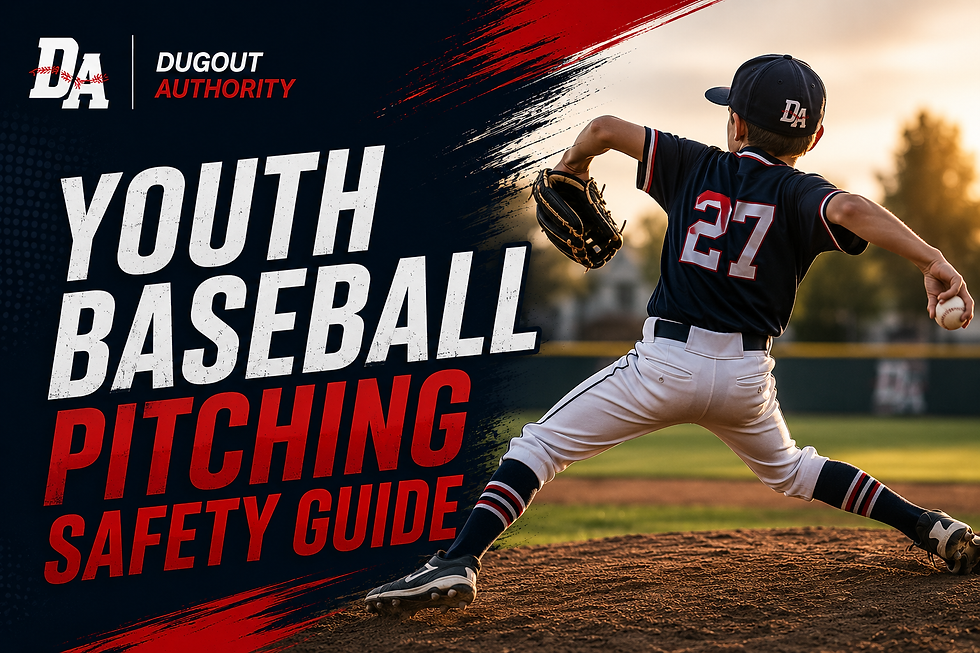
Few topics in travel baseball create more anxiety for parents than pitching injuries.
And honestly, that concern is understandable.
Over the last several years, youth baseball has become:
more competitive
more specialized
more year-round
more velocity focused
As a result, conversations around:
pitch counts
arm care
overuse
recovery
Tommy John surgery
have become increasingly common even at younger age groups.
The good news is that many youth pitching injuries are preventable when families, coaches, and players prioritize healthy development over constant throwing.
As both a coach and a parent, I have seen families feel overwhelmed trying to balance development, competition, private instruction, showcases, and tournament schedules while also protecting young arms. I have also spoken with pitching instructors, coaches, and baseball professionals who consistently emphasize the same thing:
Long term arm health matters far more than short term tournament wins.
This guide breaks down youth baseball pitching safety clearly, including:
pitch counts
recommended rest
common overuse warning signs
recovery habits
healthy development practices
for travel baseball families navigating the pitching side of the game.
Why Youth Pitching Injuries Have Become Such a Big Conversation
Youth baseball has changed dramatically over the last decade.
Players now:
throw harder earlier
train year-round
attend showcases younger
pitch on multiple teams
specialize sooner
And social media often increases pressure by constantly showcasing:
velocity numbers
radar gun readings
advanced breaking balls
high intensity training
The result is that many younger players throw more than previous generations ever did.
That workload matters.
Pitch Counts Exist for a Reason
Pitch counts are designed to help reduce overuse injuries by limiting excessive throwing volume.
The basic idea is simple:
Young arms need recovery time.
Even when pitchers feel “fine,” stress accumulates over time through:
games
bullpen sessions
long toss
showcases
lessons
practice throwing
Pitch counts help create structure around workload management.

Common Youth Baseball Pitch Count Guidelines
Different organizations use slightly different rules, but many follow versions similar to MLB Pitch Smart recommendations.
General youth pitching guidelines often look like this:
Ages 7 to 8
Daily max: ~50 pitches
Ages 9 to 10
Daily max: ~75 pitches
Ages 11 to 12
Daily max: ~85 pitches
Ages 13 to 14
Daily max: ~95 pitches
High School Ages
Daily max: ~105 pitches
These numbers vary somewhat by organization, but the overall principle remains consistent:
More pitches require more recovery.
Rest Days Matter Just as Much as Pitch Counts
This part gets overlooked constantly.
Pitch count alone does not fully protect pitchers.
Recovery time matters enormously.
Many organizations require:
specific rest periods
based on pitch totals
For example:
low pitch outings may require one day rest
heavier outings may require several days
The arm needs recovery time between competitive outings.
And importantly, recovery should include:
reduced throwing intensity
proper hydration
sleep
recovery movement
avoiding excessive extra throwing
The “He Looks Fine” Problem
One of the biggest misconceptions in youth baseball is assuming pitchers are healthy simply because they are not actively complaining.
Many younger athletes:
hide soreness
want to keep competing
fear losing playing time
struggle describing discomfort
That is why parents and coaches need to monitor workload proactively instead of relying entirely on kids to self-report issues.
Pain should never become normalized for youth pitchers.
Red Flags Parents Should Never Ignore
There are several warning signs families should take seriously.
These include:
elbow pain
shoulder pain
loss of velocity
arm fatigue
changes in mechanics
shaking the arm repeatedly
difficulty recovering between outings
reduced control
visible discomfort while throwing
One of the biggest red flags is persistent soreness that does not improve with normal recovery.
Young pitchers should not be expected to “throw through pain.”

Velocity Chasing Can Become Dangerous
Travel baseball culture sometimes creates unhealthy pressure around velocity.
Families constantly hear:
“How hard does he throw?”
“What’s his velo?”
“He hit 80 already.”
Velocity absolutely matters at advanced levels.
But forcing young pitchers to chase velocity too aggressively can create major problems when:
mechanics break down
recovery is ignored
strength development is rushed
overuse increases
Healthy development should always come before radar gun numbers.
Year-Round Throwing Increases Risk
This is one of the biggest concerns many pitching professionals discuss now.
Young pitchers increasingly:
never fully rest
move directly from season to season
throw year-round without shutdown periods
The arm benefits from structured breaks.
Many pitching experts recommend periods each year where pitchers:
reduce throwing significantly
recover physically
focus on general athleticism
Constant competition can increase injury risk substantially over time.
Multiple Team Pitching Creates Problems
This issue appears constantly in travel baseball.
Players sometimes pitch for:
school teams
travel teams
showcase teams
guest tournament teams
all within overlapping schedules.
The problem is that workload tracking becomes difficult when communication between teams breaks down.
Travel Baseball Parent Checklist (Complete Season Guide) discusses how organization and communication become critical once schedules start overlapping heavily during tournament seasons.
Pitching workload needs to be monitored collectively, not team-by-team separately.

Breaking Balls at Young Ages Remain a Debate
There is still ongoing discussion in baseball regarding:
curveballs
sliders
spin training
younger pitchers
Some instructors believe mechanics matter more than pitch type.
Others prefer delaying breaking ball development until players mature physically.
Most experienced pitching coaches agree on one thing though:
Young pitchers should prioritize:
fastball command
mechanics
arm health
repeatability
before obsessing over advanced pitch design.
Recovery Habits Matter Tremendously
Healthy pitchers usually develop strong recovery habits early.
These include:
hydration
sleep
stretching
mobility work
arm care routines
proper warmups
gradual throwing progression
The pitchers who stay healthiest long term are often the ones who treat recovery seriously instead of viewing it as optional.

Mechanics Matter Too
Poor mechanics alone do not automatically cause injuries, but inefficient movement patterns can increase stress on the arm over time.
Strong pitching instruction usually focuses on:
repeatable mechanics
balance
lower half usage
arm timing
body control
Good mechanics help pitchers:
throw more efficiently
reduce unnecessary stress
maintain consistency
Strength and Athleticism Help Protect Pitchers
Youth pitchers benefit enormously from general athletic development.
This includes:
mobility
coordination
core strength
lower body strength
balance
Healthy pitchers are usually athletes first.
Over-specialization too early can sometimes limit broader athletic development.
Parents Should Not Panic Over Every Sore Arm
This part matters too.
Not every instance of soreness means major injury.
Pitching is physically demanding.
There is a difference between:
normal post-throw fatigue and
persistent pain or dysfunction
The key is monitoring patterns carefully and responding appropriately when warning signs appear.
Long Term Development Should Always Come First
Travel baseball can sometimes create pressure to:
win tournaments
throw more innings
stay constantly visible
pitch through fatigue
But healthy development matters more than short term results.
A 12 year old does not need to sacrifice arm health for one weekend tournament.
The strongest programs usually prioritize:
communication
workload management
recovery
honesty about fatigue
over excessive usage.
Pitching Should Still Be Fun
This part gets forgotten sometimes.
Pitching is one of the most exciting parts of baseball for many kids.
Young pitchers should still:
enjoy competing
enjoy learning
enjoy improving
Fear-based conversations around injuries should not remove the joy from the position entirely.
Healthy pitching development is absolutely possible when:
workload stays reasonable
recovery is prioritized
communication remains strong
Helpful Resources for Pitching Safety
Many baseball families use resources like:
to better understand:
pitch counts
recovery recommendations
youth pitching safety
These tools help families stay informed as competition increases.

Final Thoughts
Youth baseball pitching safety is ultimately about balance.
Players need:
development
competition
recovery
communication
proper workload management
Pitch counts matter. Rest days matter. Arm care matters.
But perhaps most importantly, adults need to remember that young pitchers are still developing physically and emotionally.
The long term goal should never simply be: “How hard can he throw right now?”
It should be: “How do we help him stay healthy, confident, and strong enough to continue loving baseball for years to come?”
Because healthy development will always matter more than one tournament weekend or one radar gun reading. ⚾


